 yment
Employment and pathways
Care leavers are more likely than their peers to be out of education, employment or training, and the Children’s Wellbeing and Schools Act 2026 widens every council’s corporate parenting duties. We help councils act like a family business for their care leavers, with real jobs at the end of it.


What is employment and pathways work?
Employment and pathways work is about the routes care leavers take into education, training and work. We help councils and employers build those routes together: work experience, paid roles, and a local offer that care leavers can actually use.
 Work experience
 Employer partners
 Local offer
 CV and interview
 First job
 Pathway planning

What we do
Care to WorkOur employment programme for care-experienced young people: work experience at 16 to 18 and paid roles at 18 to 25, starting with your council.
ExampleThe Family Business, built with Suffolk County Council
Employer partnerships and eventsOpening doors with employers, from a first partnership workshop to pledges of placements, mentors and ring-fenced roles.
Examplesa partnership workshop with PwC, and employer engagement for Oxfordshire County Council
Leaving care local offersWhat care leavers are entitled to, written and designed with them so they can find it, understand it and use it.
ExampleWest Sussex, with an accessible online platform

Is this for you?
Services usually come to us when:
Your care leavers aren’t getting into work, and your apprenticeships aren’t reaching them.
You need to show how you’re meeting wider corporate parenting duties.
Local employers want to help but don’t know where to start.
Your local offer is written for inspectors, not for care leavers.

How commissioning works
Every commission follows the same five steps. Here is what you get at each one.
- 1A conversation
A free call about your care leavers and the routes into work around you.
You get- An honest view on whether we’re the right fit
- A first view of the scope
- 2A short diagnostic
We look at your current offer, your data, and the employers near you, and talk to young people.
You get- A picture of your offer today and its gaps
- The employers and roles worth starting with
- 3A clear brief
We agree the pathways and who is involved.
You get- Named outcomes
- A timeline and a price
- The roles for personal advisers, mentors and managers
- 4The work, done together
We build the pathways with your team, employers and young people.
You get- Regular progress reports
- Employer partners and placements set up with you
- Early sight of drafts
- 5A clean handover
Your team runs the pathways.
You get- Pathways and a local offer your team owns
- Guidance for staff and employers
- A plan to keep employers involved
No surprises. The first call is free. Nothing starts until you have agreed the brief, the outcomes, the timeline and the price.

Previous work
Routes into work for care-experienced young people.
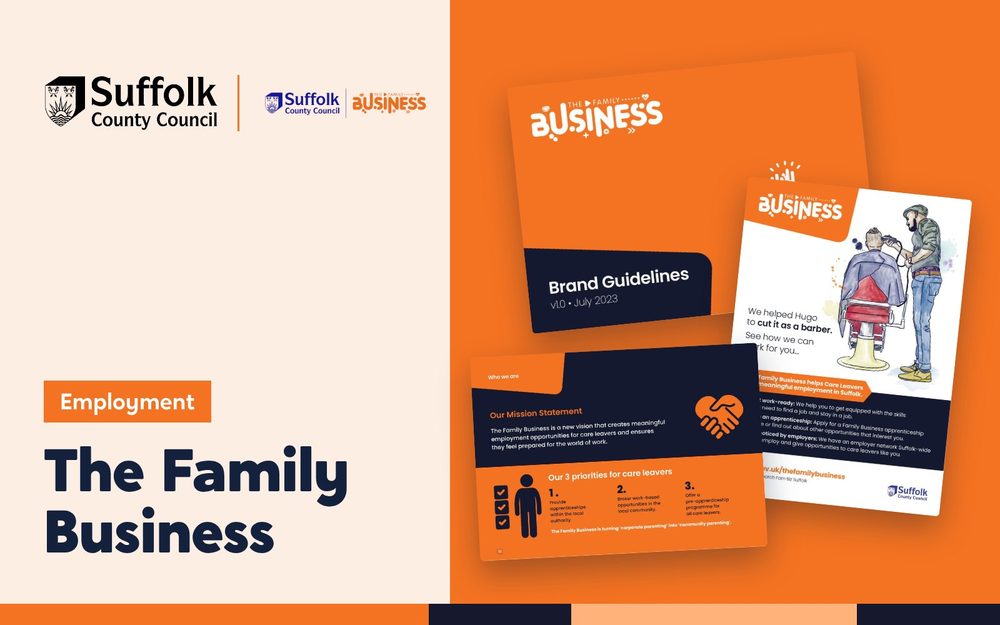
Suffolk County Council: The Family Business
From corporate parenting to community parenting. Over 60 people at the employer launch, and up to 40 young people qualified through the Skills Academy.
Read the case study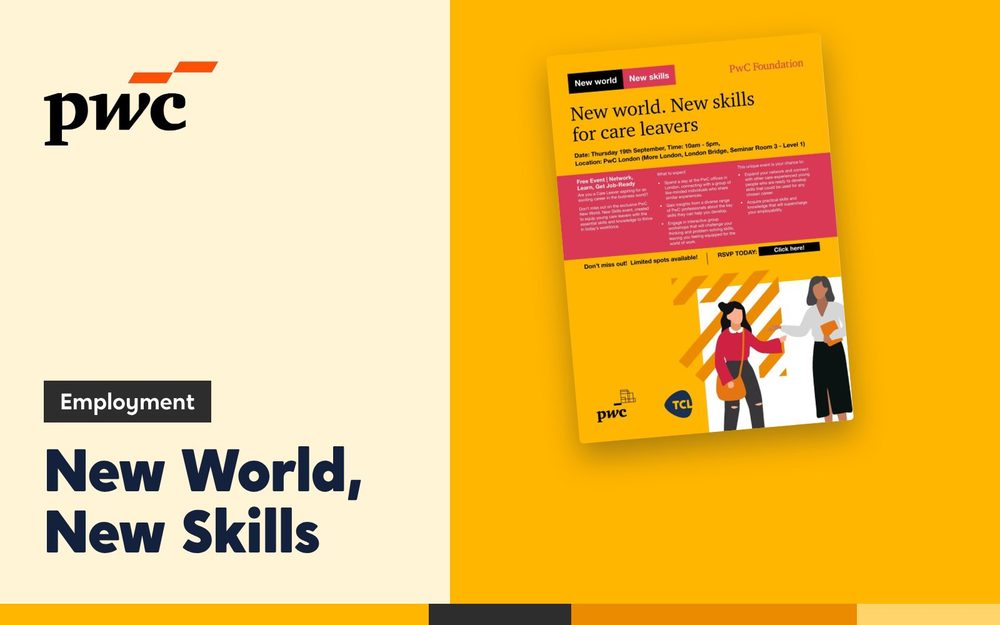
PwC: New World, New Skills
Opening the doors of a global firm to care leavers. 30 care leavers from four councils spent the day at PwC’s London office.
Read the case study
Questions commissioners ask
How is Care to Work different from an apprenticeship scheme?
An apprenticeship scheme offers places. Care to Work changes how the whole council behaves: services create roles, managers and mentors are trained to support care leavers, and local employers join in.
What does it cost?
It depends on the size of the work. We agree a price in the brief before anything starts, so there are no surprises. Contact us for a price.
How long does it take?
Most work runs for three to 12 months. We set the timeline with you in the brief.
Who do you involve?
Your leaders and staff, your partners, and the children, young people and families who use the service. We agree who’s involved, and how, in the brief.
How do we buy from you?
Smaller pieces are usually a direct award or a quote. Larger pieces may go to tender, and we’re happy to talk before you write the specification.