

Power to Lead: leadership training for young people in careYoung people leading the change.
Training that helps young people in care and care leavers choose what they share and make their point to adults. You leave with a leadership plan for each young person.
- Length
- 6 hours face to face, or 2 hours online
- Group
- Up to 60 face to face, 200 online
- For
- Young people aged 13 to 25
- Included
- Workbook, 12 months online, certificate
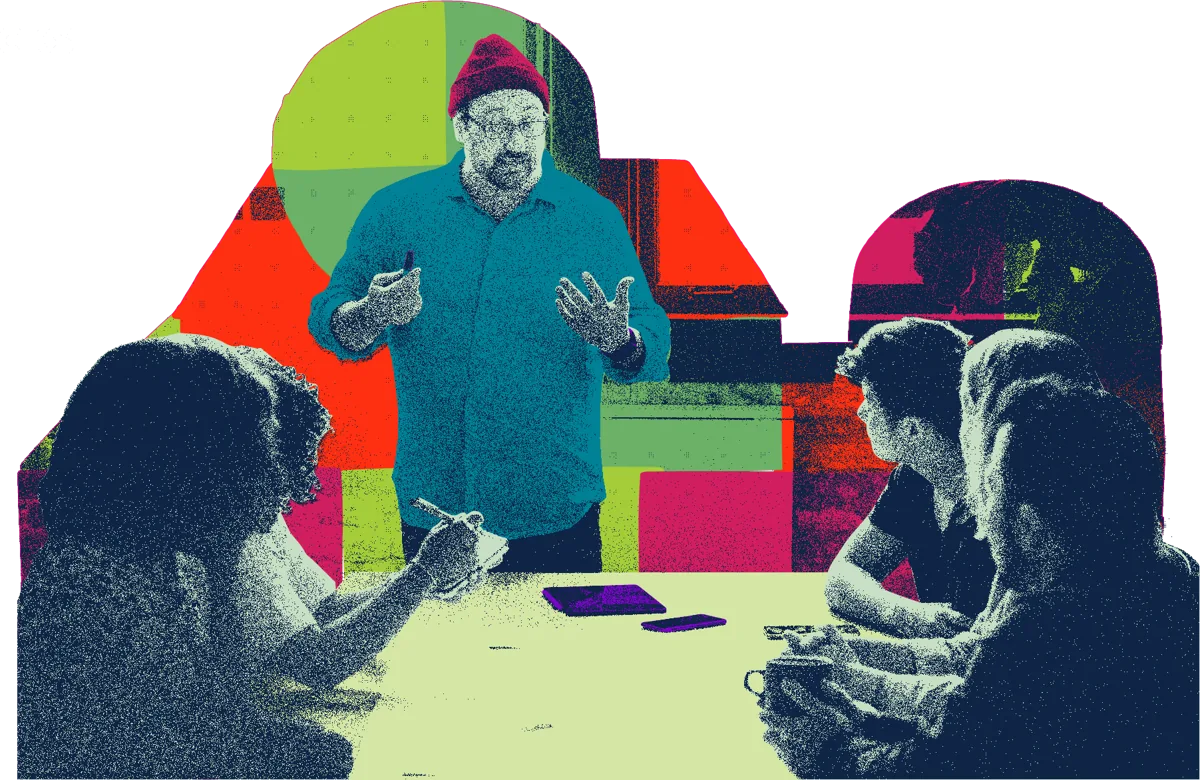
Children in care councils and youth ambassador groups are asked to speak in rooms full of senior adults. Often they have little preparation. The same few confident voices carry the load. Young people can share more of their story than they meant to, then feel exposed afterwards. Councils have a duty to encourage children in care and care leavers to express their views. Doing that safely takes preparation.
Who it’s for
Councils and forums
Children in care councils and care leaver forums
Youth participation groups
Youth ambassador, shadow board and participation groups
Ages 13 to 25
Separate groups for 13 to 17 and 18 to 25 if needed
- Up to 60 face to face, 200 online
- A worker they know is welcome to join
- No leadership or speaking experience needed
Learning outcomes
By the end of the course, people will be able to:
- 1
Describe three of their own strengths, with an example of each from their own life.
- 2
Decide which parts of their story they will share, with whom and when, and turn down a question they do not want to answer.
- 3
Explain Laura Lundy’s model of participation (2007), space, voice, audience and influence, and use it to judge whether a meeting they attend can change anything.
- 4
Explain who makes decisions in their council, including corporate parents, elected members and senior managers, and what the corporate parenting principles say about hearing young people’s views.
- 5
Make a two-minute point to a group of adults using a structure they have practised, and answer one challenging question.
- 6
Write a plan for a small project with a SMART goal, the first three steps and the adult who will back it.
Our learning framework in this course
Every Care Leaders Learning course follows Story, Theory, Action. Here is how it runs through Power to Lead.

Story
Every part opens with a story young people will recognise.
Keisha, 15, at a corporate parenting board. Connor, 16, the one who always speaks. Imani, 19, and her forum’s year of asking. Finn, 14, and an idea for a welcome pack.
Theory
Then how power and decisions really work.
The LUUT model from Pearce and Cronen’s Coordinated Management of Meaning. Tuckman’s stages of group development and Laura Lundy’s model of participation. Roger Hart’s ladder, the corporate parenting principles and George Doran’s SMART goals.

Action
Then something young people practise there and then.
A list of their strengths and a plan for what stays private. A practised way to make a point in meetings. A map of who decides, and a personal leadership plan.
The course in four parts
Every part opens with a story young people will recognise, explains the idea behind it and ends with practice in the room. The stories are composites. They draw on real experiences of care but are not one person. Open a part to see what happens.
1Me
Story. The part opens with a story of growing up in care and going on to lead change. Then Keisha, 15, who was asked to speak at a corporate parenting board. She told them about her worst placement move because she thought that was what they wanted to hear. The room clapped. She went home and could not sleep.
Theory. The LUUT model, from Barnett Pearce and Vernon Cronen’s Coordinated Management of Meaning, separates the story you lived from the story you tell. Your lived story belongs to you. The story you tell is a choice, and it can change depending on who is listening and why.
Action. Young people list their strengths and find an example of each. Then they sort their own story into three piles: what I share with anyone, what I share with people I trust, and what stays mine. They practise a line for turning down a question, such as “That’s not something I talk about here, but what I can tell you is...”
By the end of this part people can name three strengths with an example of each, say what they will share and what stays private, and turn down a question calmly.
You leave with A list of their strengths and a personal plan for what they share and what stays private.
2Us
Story. Connor, 16, is the one who always speaks at the children in care council. When he is off sick, the meeting with the director goes quiet. Nobody else has ever been asked to speak, so nobody does.
Theory. Bruce Tuckman’s stages of group development (1965), forming, storming, norming and performing, show why a new group feels awkward at first and why it gets stronger once everyone has a job. A group carried by one voice stops being a group.
Action. The group agrees roles: chair, speaker, note-taker, timekeeper and the person who asks the follow-up question. Each young person builds a short point in three lines: what is happening, why it matters, what we want to change. They say it to the group, then to facilitators playing a tougher room, and use Rewind and Replay to go back over the moment that wobbled and try it again.
By the end of this part people can make a two-minute point to a group of adults, answer a challenging question, and name the role they will take in their group.
You leave with A practised way to make a point in meetings with adults, and a role in their group.
3Them
Story. Imani, 19, and her care leaver forum spent a year asking for help with travel costs. They met managers, filled in feedback forms and were thanked every time. Nothing changed. Then they found out the decision sat with someone nobody had invited them to meet.
Theory. Laura Lundy’s model of participation (2007) says young people need four things: space to speak, support to give their voice, an audience who can act, and influence over what happens next. Most groups get the first two. Roger Hart’s ladder of participation (1992) helps young people tell the difference between being consulted and being there for show. We also explain the corporate parenting principles in the Children and Social Work Act 2017, which require the council to encourage children in care and care leavers to express their views and to take them into account.
Action. Young people pick an issue they care about and draw a power map: who decides, who influences that person, when the decision gets made and how to get in front of them. They check their plan against Lundy’s four steps and fix the gaps.
By the end of this part people can explain the difference between corporate parents, elected members and managers, and name one decision-maker for their issue and how to reach them.
You leave with A map of who decides on their issue and how to reach them.
4Next
Story. Finn, 14, thinks the welcome pack for children coming into care should be written by young people. Everyone says it is a great idea. Six months later nothing has happened, and the worker who said it has moved on.
Theory. George Doran’s SMART goals (1981): specific, measurable, achievable, realistic and time-bound. A good idea becomes a project when it has a clear goal, a first step and a date.
Action. Each young person or group writes a leadership plan: their SMART goal, the first three steps, the adult who will back it and the date they will check progress. They present it to the staff from their service, who agree there and then what they will do to help.
By the end of this part people can write a SMART goal for their project, set out the first three steps, and name the adult who will support them.
You leave with A personal leadership plan for each young person.
What you get with each course
Included for every delegate, however you run it.
A workbook to keep
Every delegate gets their own copy, with the stories, the tools and space to plan.
The online course for 12 months
An interactive course on The Care Leaders Online, for 12 months after the training.
The recording for 12 months
Live online sessions are recorded, so people can catch up or go back over a part.
A certificate of completion
For each delegate, to keep for their own development record.
Choose how you run it
Two ways to run the course.
Face to face
We come to a space young people know, or a venue you choose, 10am to 4pm. We run it in the holidays or at a weekend. The day covers all four parts and starts the project plans.
- When One day, 10am to 4pm
- Group Up to 60 people
- You provide A screen or projector with an HDMI connection
- We provide The facilitator, a workbook for every delegate and 12 months of the online course
Live online
A live session on Teams or Zoom covering the key story, theory and tool from each part. Breakout rooms are used for the practice. Each young person leaves with a first draft of their leadership plan.
- When One 2-hour session
- Group Up to 200 people
- You provide A device with a camera, microphone and internet connection for each delegate
- We provide The facilitator, the online links for delegates, a workbook for every delegate, 12 months of the online course and the recording
What changes
- Prepare young people before they meet senior adults: who will be in the room, what is being decided and what their views can change.
- Respect a young person’s choice to keep parts of their story private, and never ask them to retell it for effect.
- Share roles around the group, so it is not the same one or two young people who speak every time.
- Back each young person’s project with a named adult, and review their leadership plan with them after the course.
- Know their strengths and can talk about them with an example.
- Choose what to share about their story, and have the words ready to turn down a question.
- Know who makes decisions in their council and how to get in front of them.
- Lead a small project of their own, with a plan and an adult who backs it.
Power to Lead began as five sessions with Youth Ambassadors from across the South East, January to May 2025.
Read the case studyQuestions commissioners ask
How is the day structured?
Four parts: Me, Us, Them and Next. Each one starts with a story young people will recognise, such as Keisha sharing more than she meant to at a board meeting. Then the idea that explains it, from the LUUT model to Laura Lundy’s model of participation. Then something they practise in the room, from a line for turning down a question to a power map and a project plan. Face to face it runs as one day, usually 10am to 4pm. Online it is one 2-hour live session covering the core of each part. It began as five sessions with Youth Ambassadors from across the South East, January to May 2025.
How does this fit with The Care Leaders Academy?
Power to Lead is the place to start. The Care Leaders Academy is the full programme for young people aged 13 to 18, over several weeks with live tasks. Power to Lead can stand alone or lead into it.
What ages is it for?
Young people aged 13 to 25 who are in care or have left care. We shape the examples and activities around the ages in the group, and plan the activities so everyone takes part. If your group has a wide age range, we can run separate sessions for younger and older members.
Will young people be asked to share their story?
No. Choosing what to share, and what to keep private, is the first thing the course covers. Nobody is asked to retell their story, and every story we use as an example is a composite.
Do our staff need to be there?
A worker young people know is welcome to stay for the day. What matters most is what happens afterwards: each young person leaves with a leadership plan, and someone from your service needs to pick it up with them so the project goes ahead.
Who delivers it?
People with lived experience of care and professional experience of children’s services. Every course is designed by Luke Rodgers BEM and follows the same Story, Theory, Action approach.
Often booked with
 Mentors Who CareTraining for care-experienced adults who mentor children in care.A programme: three training days, then coaching
 Co-producing your Care Leaver Local OfferBuilding your care leaver local offer with care leavers, not just for them.6 hours face to face, 2 hours online
 The Five S Framework: Leading with Lived ExperienceA one-day introduction to the Five S Framework, for care-experienced people, leaders, or both together.6 hours face to face, 2 hours online
Talk to us about Power to Lead
Tell us who it is for and roughly how many people. We will shape it around your service and send you a quote.