

The Practice Toolkit: PACE, co-regulation and Spot, Soothe, Shift trainingTools you can use tomorrow morning.
Training that helps your team use four trauma-informed tools in the moment, not just know them. You leave with a team chart of which tool fits which moment.
- Length
- 6 hours face to face, or 2 hours online
- Group
- Up to 60 face to face, 200 online
- For
- Residential, fostering, school and Family Help teams
- Included
- Workbook, 12 months online, certificate
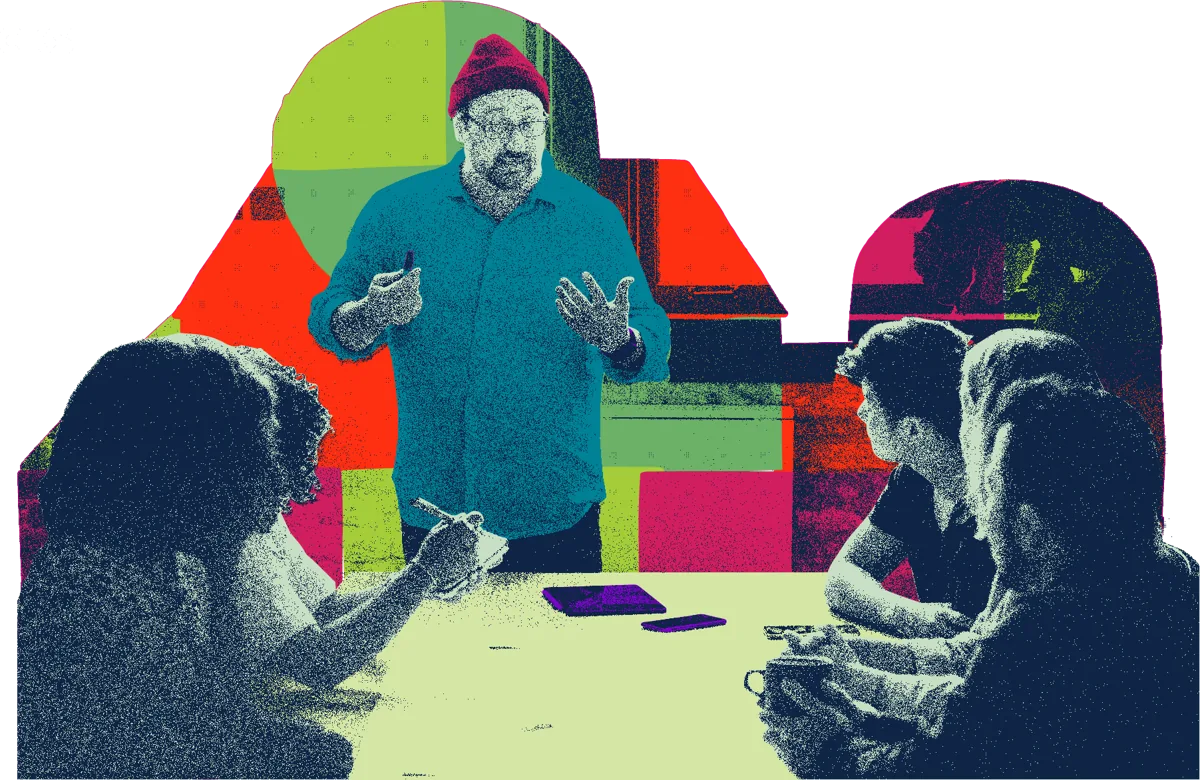
Most teams have sat through trauma training. They can tell you what PACE stands for. Then a child slams a door or tells a carer they hate them. People fall back on habit, such as a consequence or a raised voice. That isn’t a knowledge problem. Nobody has practised the words out loud. The team has no shared language for talking about it afterwards. This course is mostly practice.
Who it’s for
Children’s homes
Residential support workers, team leaders and registered managers
Foster and kinship carers
Foster carers, kinship carers and supervising social workers
School staff
Teaching assistants, pastoral staff and designated teachers
Family Help teams
Lead practitioners and early help workers supporting parents and children
- Up to 60 face to face, 200 online
- Practice in pairs and threes
- No previous training needed
- A follow-on for teams who know the theory
Learning outcomes
By the end of the course, people will be able to:
- 1
Describe a moment that escalated from the child’s side: what they were feeling, what they needed and how the adult’s first words landed.
- 2
Recognise the early signs that a particular child they support is moving out of their window of tolerance.
- 3
Explain Dan Siegel’s window of tolerance (1999) and Bruce Perry’s Regulate, Relate, Reason sequence in plain words, and why reasoning with a child in fight, flight or shutdown does not work.
- 4
Explain the four parts of Dan Hughes’s PACE, and why accepting a child’s feeling is not the same as accepting their behaviour.
- 5
Use PACE and Spot, Soothe, Shift in a rehearsed conversation with a child who is angry, rejecting or low, and recognise when a conversation has become a disclosure for the safeguarding lead.
- 6
Choose the right tool for a given moment from scenarios drawn from their own setting, and explain it to a colleague in two sentences.
Our learning framework in this course
Every Care Leaders Learning course follows Story, Theory, Action. Here is how it runs through The Practice Toolkit.

Story
Every part opens with a hard moment from a child’s side.
Four composite stories. Zara, 15, says “fine” until she throws a mug. Leon, 11, hears his visit with his dad is off. Freya, 8, tells her foster carer she is not her mum. Ollie, 16, talks late one night.

Theory
Then the idea behind each tool, in a few minutes.
Dan Siegel’s window of tolerance and hand model of the brain. Bruce Perry’s Regulate, Relate, Reason. Dan Hughes’s PACE, and John Gottman’s research on emotion coaching behind Spot, Soothe, Shift.

Action
Then most of the time goes on practice, out loud.
A Window of Tolerance map for one child and your first two minutes, tested. Three PACE responses of your own. A team chart of which tool fits which moment.
The course in four parts
Every part opens with a child’s side, explains the idea briefly and spends most of its time on practice. The stories are composites. They draw on real experiences of care but are not one person. Open a part to see what happens.
1Spotting it early
Story. Zara, 15, comes in from school, drops her bag and answers every question with “fine”. Twenty minutes later she throws a mug across the kitchen. The staff say it came out of nowhere. Looking back, the signs were there from the moment she walked in.
Theory. Dan Siegel’s window of tolerance (1999) describes the zone where a young person can think, feel and talk at the same time. Push them out of it and they go up into fight or flight, or down into shutdown. Siegel’s hand model of the brain gives staff a quick way to explain “flipping the lid” to each other and to young people.
Action. Window of Tolerance. Each person maps one young person they work with, anonymised: what they look like inside the window, the first signs they are leaving it, and what brings them back. In pairs, people then explain the hand model to each other in under a minute.
By the end of this part people can name three early signs that a particular child is leaving their window of tolerance, and explain the hand model of the brain in plain words.
You leave with A one-page Window of Tolerance map for one child you support.
2Calm before questions
Story. Leon, 11, has just been told his family time with his dad is cancelled. He is kicking the sofa. His carer stands over him asking why he is behaving like this, and he kicks harder.
Theory. Bruce Perry’s Regulate, Relate, Reason sequence explains why: a child can’t reach the thinking part of their brain until they feel safe and connected. Co-regulation means the adult lends their own calm, through their voice, pace and body, before asking the child to think.
Action. In threes, playing the child, the adult and an observer, staff run a scenario from your setting twice: once with questions first, once calming first. The observer notes what changed. Each person then writes down what they will do with their voice and body in the first two minutes.
By the end of this part people can put Regulate, Relate, Reason in order and say what they would do at each step with a child they support.
You leave with Your own list of what you will say and do in the first two minutes, written and tested in the session.
3Talking with PACE
Story. Freya, 8, has been with her foster carer for four months. At bedtime she says, “You’re not my mum. You only do this for the money.” Her carer’s first instinct is to defend herself.
Theory. Dan Hughes’s PACE (playfulness, acceptance, curiosity and empathy) comes from his work with children who have experienced trauma. Acceptance means accepting the feeling, not the behaviour. Curiosity (“I wonder if…”) replaces “Why did you…?”. PACE is not soft and it does not mean no boundaries.
Action. PACE. Each person takes the hardest thing a child has said to them recently and writes down their usual reply. They rewrite it using acceptance, curiosity and empathy, then say it out loud to a partner, with the facilitator coaching tone as well as words.
By the end of this part people can answer an angry or rejecting statement using acceptance, curiosity and empathy, and explain to a colleague why PACE keeps the boundary in place.
You leave with Three PACE responses of your own to the things children say most often in your setting.
4Naming the feeling
Story. Ollie, 16, tells a residential worker late one night that he is useless and everyone gives up on him in the end. A few minutes later he says something about what happened at his last home.
Theory. Spot, Soothe, Shift is our tool, built on John Gottman’s research on emotion coaching (1997): notice and name the feeling, soothe it, then help the young person shift how they see it. There is a hard line. A disclosure is never reframed. You listen, you don’t promise to keep it secret, and you pass it to the safeguarding lead that day.
Action. Spot, Soothe, Shift. Staff practise it on three short scenarios, one of which turns into a disclosure. The team then sorts a set of moments from your setting, agreeing which of the four tools fits each one and the words they will use for it in handover.
By the end of this part people can use Spot, Soothe, Shift with a young person who is low, recognise the point where a conversation becomes a disclosure, and choose the right tool for a given moment.
You leave with A team chart of which tool fits which moment, in shared words for handover and supervision.
What you get with each course
Included for every delegate, however you run it.
A workbook to keep
Every delegate gets their own copy, with the stories, the tools and space to plan.
The online course for 12 months
An interactive course on The Care Leaders Online, for 12 months after the training.
The recording for 12 months
Live online sessions are recorded, so people can catch up or go back over a part.
A certificate of completion
For each delegate, to keep for their own development record.
Choose how you run it
Two ways to run the course.
Face to face
We come to you, in your building or a venue you choose, for a training day, 10am to 4pm. Each of the four tools gets a full practice round, with time for moments from your own team.
- When One day, 10am to 4pm
- Group Up to 60 people
- You provide A screen or projector with an HDMI connection
- We provide The facilitator, a workbook for every delegate and 12 months of the online course
Live online
A live session on Teams or Zoom covering the key story, theory and tool from each part. Practice happens in breakout rooms in pairs and threes. Longer practice rounds are in the workbook and on-demand course.
- When One 2-hour session
- Group Up to 200 people
- You provide A device with a camera, microphone and internet connection for each delegate
- We provide The facilitator, the online links for delegates, a workbook for every delegate, 12 months of the online course and the recording
What changes
- Spot the early signs that a child is leaving their window of tolerance, and step in before it escalates.
- Calm a child first, and save the questions and consequences for when the child can hear them.
- Use PACE when a child is angry or rejecting, without taking the bait or dropping the boundary.
- Use Spot, Soothe, Shift when a child is low, and pass any disclosure straight to the safeguarding lead.
- Use the same tool names in handover, recording and supervision, so the whole team responds the same way.
- Adults who notice they are struggling before it boils over.
- Someone who helps them calm down before asking what happened.
- Being understood without being let off, and spoken to without being lectured.
- The same response from every adult on shift.
Questions commissioners ask
How is the day structured?
Four parts, one tool each, built the same way. Story: a moment from a child’s side, such as Zara throwing a mug after saying she was “fine”, or Freya telling her carer she only does it for the money. Theory: a few minutes on the idea behind the tool, from the window of tolerance to PACE. Action: most of the time, rehearsing the tool out loud on moments from your own work. Face to face it is a 6-hour day, 10am to 4pm, so each tool gets its own full practice round. Live online it is one 2-hour session covering the key story, theory and tool from each part, with the workbook and on-demand course to go deeper.
Which tools can we choose from?
The default four are Window of Tolerance, Regulate Relate Reason, PACE and Spot, Soothe, Shift. Before the day we talk about the moments your team finds hardest, and we can swap one for Emotion Coaching or Separating Reason from Behaviour from The Care Leaders Tools Suite.
Our staff have already done trauma training. Will this repeat it?
No. The theory is kept to a few minutes per tool and most of the time goes on practice. It is built for teams who know what PACE stands for but struggle to use it with a child who is shouting at them.
Is there a version for Family Help teams?
Yes. For Family Help lead practitioners and early help workers we use the same tools with stories from work with parents and children at home.
How do we keep it going afterwards?
Everyone gets a workbook for the tools covered, and the tools are on The Care Leaders Online so new starters can catch up. We suggest managers pick one tool for each supervision or team meeting in the month after the session, using the team chart from part 4.
Who delivers it, and how do you price it?
Trainers with lived experience of care and professional experience of children’s services. The course was designed by Luke Rodgers BEM, who grew up in care and has spent his career leading change in children’s services. Each format has one flat fee. Face to face covers up to 60 people, and over 60 we charge for an additional facilitator. Live online covers up to 200 people. The workbook, the online course and the recording are included in the flat fee. Tell us what you need and we will send you a quote.


Talk to us about The Practice Toolkit
Tell us who it is for and roughly how many people. We will shape it around your service and send you a quote.